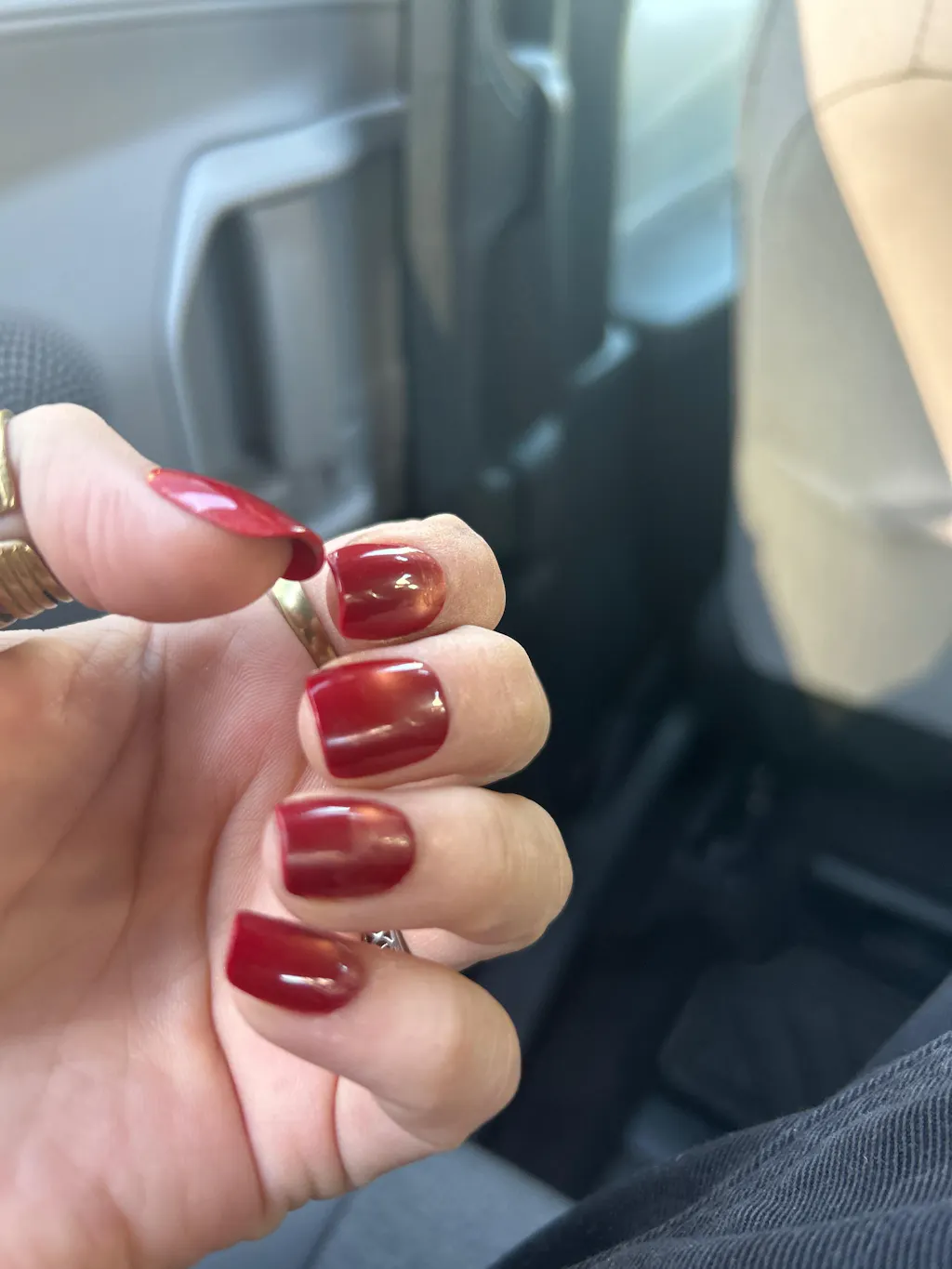
Press On Nails Adhesive: Are Press-On Nails Truly Waterproof?
Most people think hot water melts their press on nails adhesive and causes premature popping. The truth is slightly different. Your natural nail actually acts like a sponge. When exposed to water, your real nail swells and expands. This expansion breaks the rigid glue bond from the inside out. If you want durable press on nails, the secret lies in understanding nail biology and strict curing times.
Can Water Weaken Nail Glue?
Yes, water absolutely weakens nail glue over time, but not in the way you might think.
It is a common misconception that water simply washes away or melts nail glue. In reality, the issue is structural and biological. Your natural nails are made of layers of keratin, making them highly porous. When your hands are submerged in water for a bath or doing dishes, your natural nails absorb that moisture and physically expand. Sometimes they expand by up to a third of their original thickness.
Standard liquid nail glue dries into a hard, plastic-like layer. When your natural nail expands from water absorption, but the rigid glue does not stretch with it, the bond suffers micro-cracks. This tension is what causes the nail to lift and pop off.

Liquid Glue vs. Adhesive Tabs in Water
The type of bonding agent you use dictates how it reacts to moisture.
| Adhesive Type | Water Resistance | Best Use Case | Reaction to Water |
|---|---|---|---|
| Liquid Nail Glue | High (Once fully cured) | 1 to 2+ weeks of wear | Forms a crystallized seal. Fails if the natural nail expands too much underneath it. |
| Press On Nails Adhesive Tabs | Low | 1 to 3 days of wear | Acts like double-sided tape. Quickly loses stickiness and breaks down when submerged. |
How Long Should You Wait Before Getting Nails Wet?
You must wait at least 12 to 24 hours for maximum water resistance. Timing is the absolute most critical factor in a waterproof manicure. A major mistake people make is washing their hands immediately after applying their nails.
Liquid nail glue may feel dry to the touch within ten seconds, but chemically, it takes much longer to fully polymerize. If liquid water touches the glue during this phase, it causes "shock polymerization." This turns the glue white, brittle, and incredibly weak.
Your Waterproofing Curing Timeline:
- The First 2 Hours (The Danger Zone): Absolute zero water contact. Avoid washing your hands, applying wet lotions, or cooking. Use hand sanitizer on your palms if necessary, but keep it away from your nail beds.
- The First 12 to 24 Hours (The Curing Window): Avoid heavy water exposure. A quick, cool hand wash is fine, but skip long steamy showers, scrubbing dishes, or hitting the pool.
- 24+ Hours (Fully Cured): Your glue has reached its maximum bonding strength!
Pro Tip: Learn how to make press on nails last by applying them right before you go to sleep. This gives the glue an uninterrupted 8-hour window to cure perfectly without any accidental exposure to moisture.

The "Clear Polish" Sealant Hack
If you want to take your waterproofing to the next level, create a physical barrier. Water usually sneaks in through the tiny gap where the quality press on nails meet your natural cuticle.
How to seal your nails in 3 steps:
- Wait until your nail glue has cured overnight.
- Take a bottle of regular clear nail polish or a clear top coat.
- Carefully paint a very thin line right along the cuticle edge, essentially caulking the tiny seam between your skin and the press-on nail.
Optional: Swipe a little clear polish under the tip of the nail if your natural nail is exposed underneath. This invisible shield stops water from seeping into the glue zone.
Is It Safe to Swim with Press-On Nails?
Yes, you can absolutely swim with your press-ons! Once your adhesive has fully cured after the 24-hour mark, a good set of nails can handle a trip to the beach or the pool. However, different environments pose different threats:
- Pool Water (Chlorine): Chlorine is a harsh chemical designed to break down organic matter. Prolonged exposure will slowly eat away at the chemical bonds of your nail glue. Expect your nails to lift a few days earlier than usual if you swim daily.
- Ocean Water (Saltwater): Saltwater is gentler on the adhesive chemistry than pool chlorine. The real danger at the beach is physical force. Crashing waves or digging in wet sand can easily bend or snap your nails.
How to Protect Your Manicure in the Shower
Showers are far more dangerous to your manicure than swimming pools because of the heat. Hot water and thick steam soften the cured glue, returning it to a gummy, flexible state. When the glue is warm, the slightest bump can cause the nail to slide right off.
3 Rules for Showering with Press-Ons:
- Lower the Temperature: Try taking lukewarm showers instead of boiling hot ones. The cooler the water, the safer your adhesive bond remains.
- Retire Your Nails as Tools: Never use freshly applied nails to vigorously scrub your scalp. The combination of warm water, slippery shampoo, and physical leverage is a recipe for disaster. Use a silicone scalp massager instead.
- Cool Down Before Touching: When you step out of the shower, dry your hands gently. Do not press down, wiggle, or adjust any nails while they are warm and wet. Let them cool to room temperature to re-harden.

How to Fix a Lifted Nail After Washing Dishes
If you accidentally soak your hands and notice a nail starting to lift at the cuticle, do not just press it back down or add more glue over the wet gap.
Warning: Water trapped between your natural nail and the artificial nail creates a damp environment. Within days, this can cause "Green Nail Syndrome," which is a green bacterial stain on your natural nail plate that can spread if left untreated—see a doctor if it persists or worsens.
The Fix:
- Remove the lifted nail completely.
- Wipe your natural nail with rubbing alcohol to dry out all hidden moisture.
- Lightly buff the area.
- Reapply the nail with a fresh drop of glue.
FAQs
Q: Can I wash the dishes while wearing press-on nails?
Yes, but you must wear rubber dishwashing gloves. The combination of hot water, grease-cutting dish soap, and physical scrubbing is the ultimate enemy of nail glue. Gloves act as a perfect waterproof shield.
Q: Do adhesive tabs melt in water?
They do not technically melt, but water severely compromises their grip. If you are wearing tabs, it is best to avoid submerging your hands in water completely.
Q: Why do my nails pop off immediately after I shower?
You likely showered before the glue fully cured (within the first 24 hours), or your shower was so hot that the steam softened the cyanoacrylate glue back into a gel state. Always wait a full day before taking a hot shower.
Conclusion
Water does not have to be the enemy of your flawless manicure. By respecting the initial curing time, utilizing the clear polish hack, and making a few simple shower adjustments, you can easily maintain press on nails that last. Ready to upgrade your routine with stunning styles that actually stay put? Explore the premium collections at Never Have I Ever and find your perfect, life-proof set today!